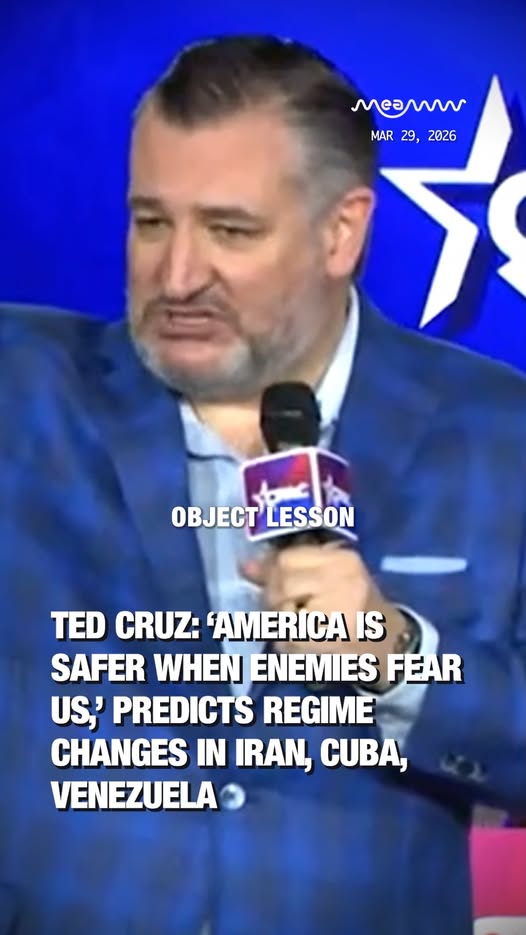
U.S. Senator Ted Cruz has expressed a strong and consistent view on foreign policy: the United States and the world are safer when American leadership is firm and its enemies are deterred by strength. His recent remarks emphasize the possibility of major political changes in countries such as Iran, Cuba, and Venezuela.
Cruz argues that the current global situation presents a rare opportunity for transformation. In a recent interview, he stated that it is “entirely possible” that the regimes in Iran, Venezuela, and Cuba could collapse within a short period of time, potentially leading to governments that are more friendly toward the United States. This, he suggests, could mark one of the most significant geopolitical shifts in modern history.
At the core of Cruz’s perspective is a simple principle: strength ensures peace. He believes that when American leaders project power and resolve, adversaries are less likely to act aggressively. According to Cruz, weakness or appeasement can invite conflict, while a strong stance discourages hostile actions and protects national security.
This philosophy also shapes his views on countries like Iran, Cuba, and Venezuela, which he often describes as adversarial regimes. Cruz has long supported policies that apply economic and political pressure on such governments, arguing that these measures can weaken authoritarian systems and empower citizens seeking change. He has even stated that supporting regime change in certain cases can serve U.S. interests and global stability.
However, Cruz acknowledges that such outcomes are not guaranteed. Political transitions are complex and unpredictable, and many factors could prevent these regimes from falling. Despite this uncertainty, he maintains that the United States is currently in a stronger position than at any time in recent decades to influence global events.
In summary, Ted Cruz’s foreign policy outlook is grounded in the belief that American strength deters threats and promotes peace. His prediction of potential regime changes in Iran, Cuba, and Venezuela reflects both optimism about current geopolitical conditions and confidence in a strategy centered on power and deterrence.